
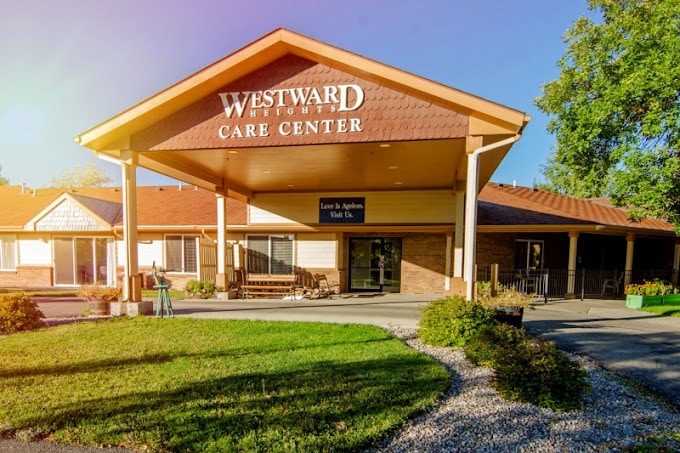
Westward Heights Care Center in Lander, Wyoming changed institutional culture by relaxing rigid processes and systems and experienced profound outcomes:
- Retention rate improvement: 7 – 9/2022 – 86%; was 69% previous quarter.
- Bonuses just to come to work no longer needed.
- Decreased labor needs: 3 instead of 4 CNAs at night; 5 fewer med aide hours needed per day.
- Overtime usage decreased: 160-200 hours/month to 120 hours/month.
- Pressure ulcers decreased.
- Falls decreased.
- Supplement usage decreased: $1000.00 to $250.00/month.
- NO WEIGHT LOSS for the first time in 7 years.
- No job openings!
The thoughtful director of nursing, Sothea Kness noticed her team members, CNAs in particularly, were stressed out and asked why. All the tasks to do by a certain time was stressing them out. This interaction prompted the team to join a one-year culture change journey Implementing Culture Change throughout Wyoming; Affecting Resident-Directed Living and Team Member Retention a CMS reinvestment project awarded to Edu-Catering April 2021 – March 2024.
After discussing the practice of waking people up on an arbitrary, institutional schedule, they realized this is not normal. So, the team stopped waking people up on a set institutional schedule supporting instead each person’s natural awakening. Additionally, they shifted to only waking people during the night per their preference and individualized need not according to a generic approach such as “turn and reposition every two hours” or “check and change every two hours.” Doing anything the same for everyone is generic care. What is required and certainly better is individualized care.
The team implemented personalized med pass. Sothea herself analyzed each person’s medications, spoke with each person as able or family as well practitioners to identify medications that could be discontinued namely vitamins and minerals that are not assimilated for any of us at older ages. They also asked those who live there – and sleep there and take their medications there – when each preferred to receive their medications. Many chose bedtime instead of at meals, pointing out they get too full.
The team went slow one neighborhood at a time. They used the practice of really observing each person when sleeping. If the individual repositioned themselves, the observant nursing team member did not touch or risk waking the person. They got even better at watching those they serve learning their needs and patterns and then proudly shifted to fitting their work to each individual who lives there.
Because they proactively learn the person and observe their needs as they go, they found no need to use the institutional bowel and bladder/bladder diary record or sleep record. The night team loves it. Individuals are well rested. The team reports it is more peaceful, quieter and there is less stress. Less stress for the individuals who were awakened according to a contrived institutional schedule and less stress for CNAs.
Recognizing real stress was what started the culture change effort and less stress is the result of redesigning systems to serve those who live there.
Instead of institutional practices driving their work, the individuals who live there, lead what the team does and when.
This embodies a quote from a leader of the three-decade culture change movement by Wendy Lustbader:
No longer are the needs of the institution to come before the individuals who live there.
Individualized care is more efficient. So much so, the Westward Heights team found they need fewer team members. Transitioning from institutional – treat everyone the same – care to individualized care – per person – translated into needing only three CNAs at night rather than four.
Additionally, the more efficient person-driven practices reduced need for medication pass time. Scheduled medication aide time reduced from 16 hours to 11 hours per day – a five hour per day reduction.
Everything is more relaxed and manageable. There is no more, “I have to go get someone up.” “It’s so nice for them to not be woken up.” There is less napping and falling asleep at breakfast. People are more engaged during the day.
The dining team now offers open dining where each meal is available for at least 2 hours and actually all day now. Individuals can come and go when they choose. The easy going dining team says, “We just go with the flow” serving people whenever they come. “If someone wants something, we just pretty much make it.” The team also offers a cold breakfast outside of the hot breakfast time.
The team admits honestly, “We never even asked if someone wanted to eat or if they were hungry. We train people to go to meals, we pass out snacks and then they gain weight, say 20 pounds and then we need an ‘intervention’ to help them get back to baseline and then that is a trigger on the MDS because of weight loss.”
The team admits they were scared about skin and pressure ulcers. Worried if they didn’t “turn and check and change every two hours,” as has been “drilled into their thinking otherwise there would be skin breakdown.” They admit they were surprised that skin problems decreased and skin improved! When I asked them to try to explain why, why did skin improve, they answered, “Well, I guess because they are sleeping!”
Sleep= healing = healthier skin, fewer falls, good mood, more alert, able to take in the day/eat = health. The institutional practice of waking people diminishes health… the normal commonsense practice of honoring sleep actually improves health.
Smart Administrator Caitlyn Delbridge tracked the amazing outcomes and timeframe… all this happened during the aftermath struggles of COVID-19, April 2022 to March 2023, showing changing institutional culture can happen anytime and ends up being a blessing to everyone involved.
The Westward Heights story is one of 5 mini- documentaries on YouTube under Wyoming Culture Change Nursing Home Videos 2023 along with Star Valley, Life Care of Casper, Morning Star Mission at Castle Rock who also have incredible stories of changing institutional culture.
Westward Heights participated in the Wyoming Nursing Home CMS Civil Money Penalty Project Implementing Culture Change throughout Wyoming; Affecting Resident-Directed Living and Team Member Retention awarded to Edu-Catering. Teams used the Artifacts of Culture Change (ACC) measurement tool that was funded and released by CMS Division of Nursing Homes in 2006. A 2021 Maryland CMP project funded the ACC 2.0 and the first-ever ACC – Assisted Living both available here:
Many culture change practices are supported by and even part of CMS regulations. Culture change practices embody federal requirements as well as provide better compliance than do institutional practices by far.
The Artifacts of Culture Change (ACC) was funded and released by CMS DNH (2006). The ACC represents resident-directed living, being well known, home environment and accommodation of preferences and needs, family and community, and leadership and team member engagement practices, many of which are very simple, representative of decades of the culture change movement and many of CMS’ regulations. Although the idea for CMS to create a data base and require certified nursing homes to complete the ACC came from within CMS, unfortunately, it never happened… but it could! Regarding that, a nursing home administrator said, “If this had been done in 2006, nursing homes would be certainly be different now.” It would be so easy for CMS to create a data base for nursing homes as the tool uses a simple tally/ordinal format tabulating whether the home has implemented the Artifacts items/practices. Artifacts is a means to get the ideas and practices of changing institutional culture in front of nursing home administration and teams. The ACC is known as an educational, inspirational, and benchmarking, self-assessment tool. It came out of CMS Central Office, was funded by CMS originally and subsequently through a Maryland Civil Monetary Penalty (CMP) grant in 2021 to create the Artifacts of Culture Change 2.0 (https://www.pioneernetwork.net/artifacts-culture-change/). A paper documenting the Artifacts 2.0 validation process is now published in the international peer review journal Activities, Adaptations and Aging: Dignified and Purposeful Living for Older Adults (4/23). The Artifacts 2.0 is a platform for homes to showcase changed culture and could be used by CMS for comparison of culture change practices and survey outcomes/deficiencies as well as Quality Measures and other health outcomes. Promoting the use of this tool and using it matches NASEM Goal 6: … developing and adopting new measures for Care Compare. … What if… CMS intentionally got quality of life reflected in the Five-Star Quality Rating System requiring nursing homes to complete the Artifacts of Culture Change 2.0 annually (easily outside of the survey window)?
Quality of life would improve the quality and breadth of Care Compare. Using the Artifacts of Culture Change 2.0 would make public the culture change practices and be of assistance to people interested in possibly living in homes which have a changed institutional culture. CMS could replicate a similar data base like the Hospital Patient Death reporting, keeping costs lower, and/or share costs with the Quality Measurement and Value-based Incentives Group since that group does quality measurement. What if … CMS agreed and got authority to finally include a measure reflective of quality of life for those living in the nursing home (rather than overall state/national threshold clinical quality measures, only a nursing staff measure, and regulatory annual survey compliance by the nursing home, i.e., number of deficiencies and level of severity).
Ironically, CMS talks about being burden-sensitive toward nursing homes. Combine that with the long-held request of nursing homes to be able to show the good things they do rather than only the negative as does the current, outdated, negative, punitive process of only identifying deficient practice, not rewarding good practice.(See Proposed HRSA & Other Models for a non-punitive survey process.) What if … CMS first created a Voluntary Star? And/or a pilot as CMS did originally with the quality measures.
What if a measure like the Artifacts score was incorporated into Care Compare? Goal 6 of the NASEM report calls to … develop and adopt new measures for Care Compare.… What if CMS started with a Voluntary Star moving towards including completion of the Artifacts of Culture Change 2.0 annually incorporating data into the 5 Star Ranking? This would add a measure reflective of quality of life for those living and quality of work life for those working in the nursing home rather than clinical quality measures and staffing only. This would create a way for homes to show the good things they do rather than only the negative as does the punitive identification of only deficient practice which has never been tested or compared.
Carmen Bowman is a consultant, trainer, author, and owner of Edu-Catering: Catering Education for Compliance and Culture Change turning her former role of regulator into educator. Carmen was a Colorado state surveyor and policy analyst with CMS Division of Nursing Homes where she taught the national Basic Surveyor Course. As a contractor to CMS, Carmen co-developed the original Artifacts of Culture Change and facilitated the Pioneer Network and CMS-sponsored Creating Home national symposiums regarding culture change and the environment, and food and dining. Carmen led the PN Task Force that created the New Dining Practice Standards. Carmen holds a Master’s in Healthcare Systems, is a Certified Eden Alternative Associate and Mentor and Certified Validation Presenter. She co-founded the Colorado Culture Change Coalition and with Action Pact has authored eight culture change workbooks plus hosts the fourteen-year monthly culture change talk show Conversations in Culture Change with Carmen. Carmen is co-editor of the Activities, Adaptations and Aging: Purposeful and Dignified Living for Older Adults international peer reviewed journal. She co-developed the Artifacts of Culture Change 2.0 and first-ever Artifacts of Culture Change for Assisted Living.
Carmen began the WY Culture Change Coalition as part of the CMS reinvestment project Implementing Culture Change throughout Wyoming; Affecting Resident-Directed Living and Team Member Retention April 2021 – March 2024. Of 10 homes who implemented culture change practices for one year:
- Average turnover reduced from 59.9% to 39.4%.
- Although the agreement was to implement at least 3 practices, homes implemented more – up to 13!
- Satisfaction surveys improved for 5 of the 6 homes who were able to obtain both pre and post project data.
These outcomes plus more from the state ombudsman and QIN are included in the Wyoming Legislator Video 2024 – Changing Institutional Culture really does Improve Outcomes available here: https://www.youtube.com/watch?v=JXkzsh-GkkI&t=227s
Leave a Reply